
Best Hugo Boss Fragrances
The Suit Brand That Learned How to Smell
Hugo Boss built its fragrance business from the same premise as its clothing: disciplined, aspirational, dressed for work. The house launched Boss No 1 four decades ago as a calling card for the man in the serious suit, and the DNA held through every major release that followed. When Boss Bottled arrived in 1998, composed by Annick Menardo, it distilled that brief into one of the best-selling men's fragrances in history: apple, cinnamon and wood over a clean base, the smell of a well-groomed professional in a climate-controlled office. It is the house's commercial anchor and one of the great best office fragrances for men, almost perfectly calibrated for that setting. The original Boss Bottled is prose-only in this guide — it has its own dedicated treatment on the site — but understanding it is the key to reading everything that came after.
The Bottled line grew from there, and understanding what it became is the most useful thing you can take from this guide. The EDP and Parfum versions that followed represent genuinely distinct chapters rather than colour variations, and both are worth considering on their own terms. Alongside those, the house developed the Scent line as a moodier, more evening-facing counterpart, a different answer to the question of what Boss fragrance should feel like. The archive holds two originals — Hugo EDT and Boss No 1 — that come from eras before any of this and feel accordingly different. Together, these six bottles tell you most of what Hugo Boss has done well in fragrance across four decades of trying.
What the house has consistently done is calibrate for a broad, commercially literate market without fully abandoning the idea of craft. That sounds like a low bar, and in some respects it is, but it means that even the flankers have structural logic, and the archive entries have genuine historical weight. Boss is not a niche house and makes no claim to be one, but it is a house that has occasionally made fragrance that rewards more attention than it typically gets at a department-store counter.
The Bottled Dynasty
The success of the 1998 original created obvious commercial pressure to build around it, and the house eventually extended the Bottled line upward rather than just sideways. The original formula, Annick Menardo's apple-and-cinnamon office monument, is nearly three decades old now and has been reformulated across that span, but the brand architecture around it has expanded considerably. Boss Bottled Night is in the archive and is the better flanker for anyone wanting something darker and more contemporary than the original; worth noting, though not pinned here. The two that genuinely matter in the current range are the EDP and the Parfum, each of which represents a structural evolution on the 1998 blueprint rather than a minor reformulation.
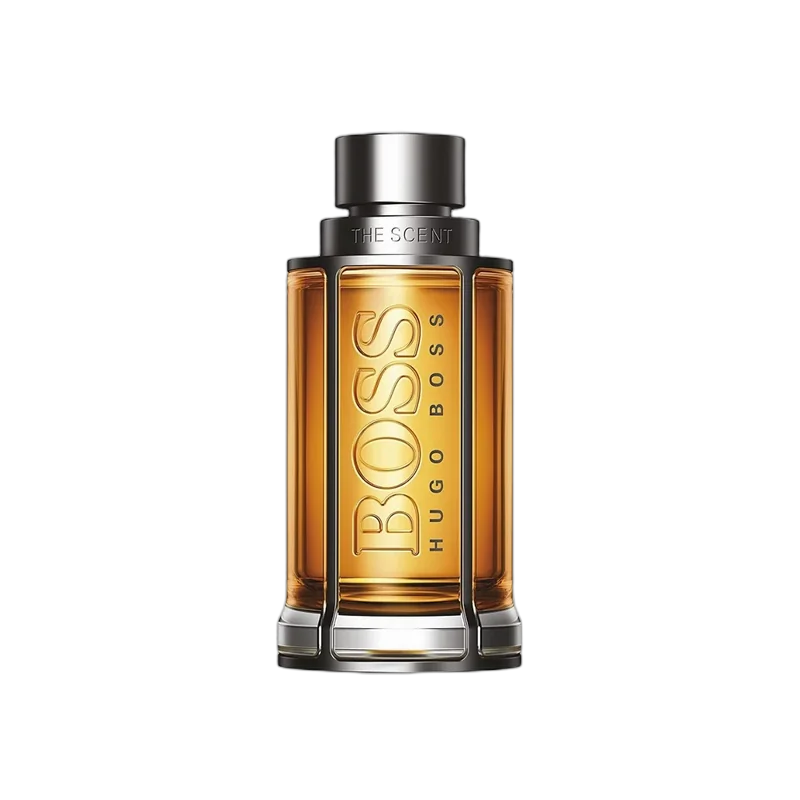
The Scent Man Eau De Toilette
The Scent Man landed in 2015 as the house's conscious departure from the corporate-fresh Bottled world, a warmer, darker proposition aimed squarely at evening and date-night. It opens on ginger root and a subtropical fruit called maninka — a West African berry that reads in the dry-down as something between fig and caramel — before settling into a leather and cocoa base that keeps it from turning purely gourmand. The effect is smooth without being anonymous, a fougère-adjacent structure given a gourmand twist that earns it steady praise from people who find classic office scents too safe. Projection is polished and assertive for the first few hours, settling into a close, warm trail that lasts the better part of an evening. The bottle is a departure too: dark amber glass, a vaguely architectural shape, a significant step away from the silver-capped Bottled flacons. Hugo Boss brought in actor Tom Hardy for the campaign, which suited the scent's more brooding register. Where Bottled built the house's commercial empire, The Scent Man represents what Boss can do when it moves away from the boardroom. At accessible designer prices, it is the most versatile evening pick in the Hugo Boss range.
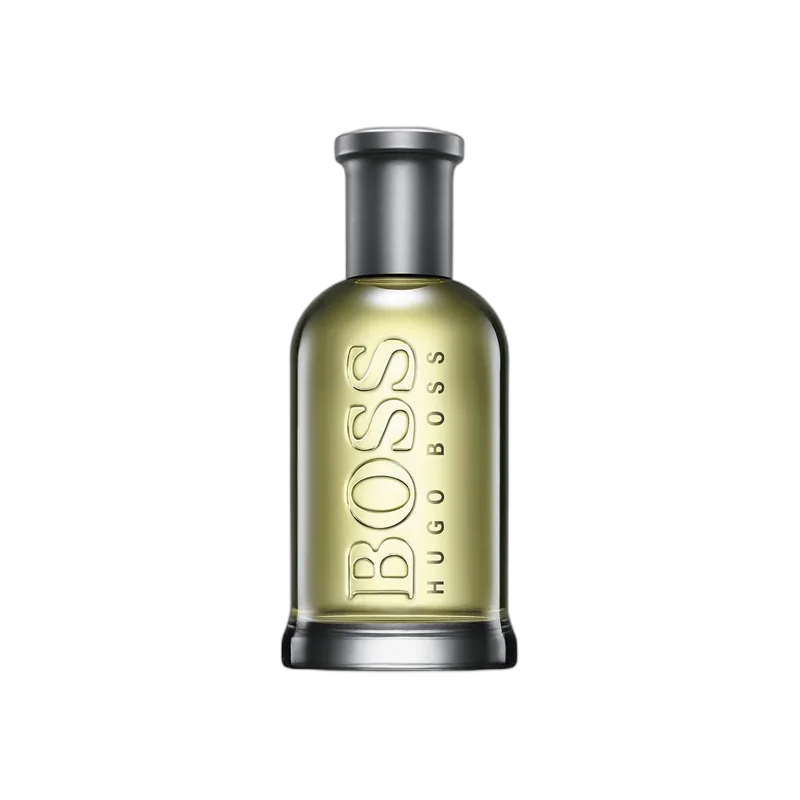
Boss Bottled Eau De Parfum
Released in 2020 as the Bottled line's warmer, more enveloping chapter, Boss Bottled EDP keeps the apple-and-spice DNA of the original but deepens it considerably. Where the 1998 original is crisp and suited to bright mornings, this version leads with a roasted apple and nutmeg accord before settling into a heavier base of sandalwood, vetiver and a sweet amber that gives it a distinctly cosy, after-dark character. The apple note here is baked rather than raw, closer to a tarte tatin than a supermarket aisle, which shifts the whole scent from office-safe to something that works better on a cold evening. Performance is a clear step up from the original too, wrapping the skin in a dense, well-behaved trail that holds through most of a night without broadcasting aggressively. The dark blue-grey bottle borrows the classic Bottled silhouette but dressed down, black metal rather than silver. The effect is a Bottled for people who find the original too light and too linear, a cold-weather companion that shares the blueprint but runs in a different key. Between this and the Parfum, the EDP is the safer first step because it keeps more of the familiar apple warmth that made Bottled the genre benchmark it became.
The EDP reads as the Bottled for cooler months and evening contexts, keeping the apple-and-spice signature but warming and deepening it through a richer sandalwood-and-amber base. The Parfum is the more interesting creative choice, swapping the familiar fresh apple opening for a darker, greener fig accord that moves the whole line into territory the original never visited. Taken side by side, the three versions of Bottled illustrate how a fragrance house can extend a line without simply diluting it — each step up the concentration ladder brings a genuinely different character, not just more intensity of the same thing. If you already own the original Boss Bottled and want to know where else the house went with the concept, these two are the logical next step rather than redundant purchases. Understanding what separates them is partly a question of occasion and partly a question of season; the EDT vs EDP differences are worth understanding before committing to either, especially if you are deciding between the EDP and the Parfum.
The Scent Line
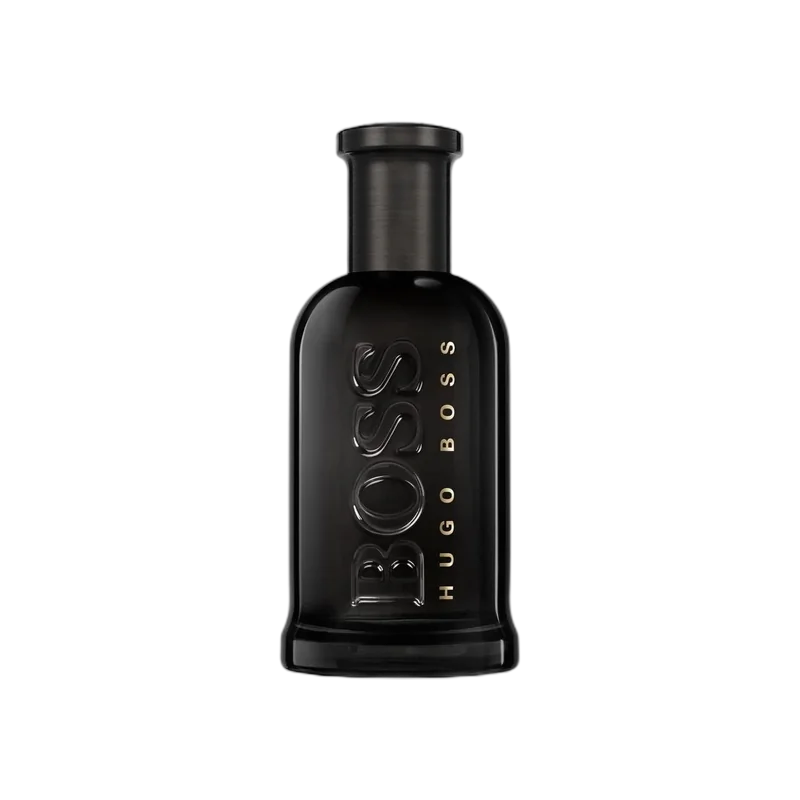
Boss Bottled Parfum
Boss Bottled Parfum, released in 2022, is the most ambitious entry in the dynasty, pulling the apple-and-spice foundation of the line into genuinely interesting territory. It replaces the fresh opening of the original with a cold fig-leaf accord and a bitter green facet that feels more expansive than anything earlier in the Bottled range, before a leather and incense base darkens the dry-down considerably. Taken in isolation, without knowing the Bottled history behind it, it reads more like a niche-inspired designer than a flanker of a mass office scent. There is real structural contrast here, the green bitterness of the fig top against the smoky, slightly animalic leather base, and it wears more seriously than the EDP despite a similar projection profile. Performance is assured without being aggressive, projecting with quiet authority and lasting well through an evening on skin. The bottle marks the step up too: deeper black glass, a weightier cap, the kind of flacon that signals top-of-range without shouting. On value grounds, it is the most interesting purchase in the Bottled family for someone who already owns the original and wants to know where the line can actually go.
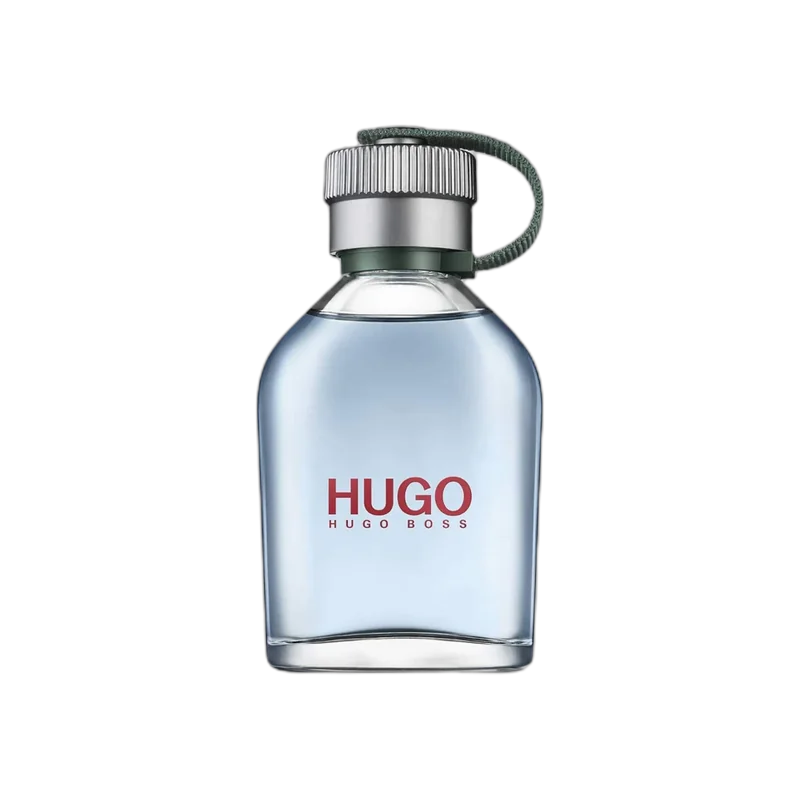
Hugo Eau De Toilette
Hugo EDT arrived in 1995 as the house's youth counterweight to the suited Boss Bottled universe, and the canteen-shaped blue-grey bottle became one of the decade's most recognisable flacons. Green apple, tomato leaf and violet open it with a startling freshness that sits firmly in the 90s aquatic-fresh school, and the heart develops into a lavender and geranium fougère structure over a clean musk and oakmoss base. The whole package is bracingly cool and linear in the best sense: it does not transform dramatically, just stays clean and green from open to close. It was one of the first mainstream scents to commit to that aggressive green-apple opening, and a whole decade of fresher masculines owes it something. Performance is modest by current expectations — it projects well at first and fades faster than modern formulas tend to — but the freshness it delivers in those first hours is exactly what made it a hit. It still wears well over thirty years on, a piece of fragrance history that costs almost nothing by current niche-house standards. If your reference for Hugo Boss begins and ends with Bottled, this is the reminder that the house once spoke an entirely different dialect.
The Scent Man and The Scent Magnetic Man represent a different creative register for the house, warmer and more evening-focused than the Bottled world and less interested in projecting competence than in projecting presence. Where the Bottled range asks: what does someone dressed for the office smell like, the Scent line asks: what does someone who dressed for something else smell like. Both are built around ginger and a warm base, but the difference in character between them is genuine enough to matter in practice.
The Scent Man, which kicked the line off in 2015, is the more restrained and versatile option, a leather-and-cocoa dry-down built around the maninka fruit accord that gives it its distinctive warmth. Tom Hardy fronted the campaign and suited it well — the scent has that same quality of physical self-possession without aggression. The Scent Magnetic Man, arriving eight years later, turns up every dial, running considerably sweeter and projecting louder, which makes it more occasion-specific and more demanding of the right context. It is the better choice for someone who actively wants that sweetness and volume and knows where they are wearing it; it is the wrong choice for anyone expecting a small variation on the original.
Between the two, The Scent Man earns the higher position on this list because it is the more versatile buy, capable of straddling casual evenings and dressed-up contexts without strain. The Scent Magnetic Man is not inferior, it is simply more specific — and that specificity is worth being honest about before buying at designer prices.
The Originals
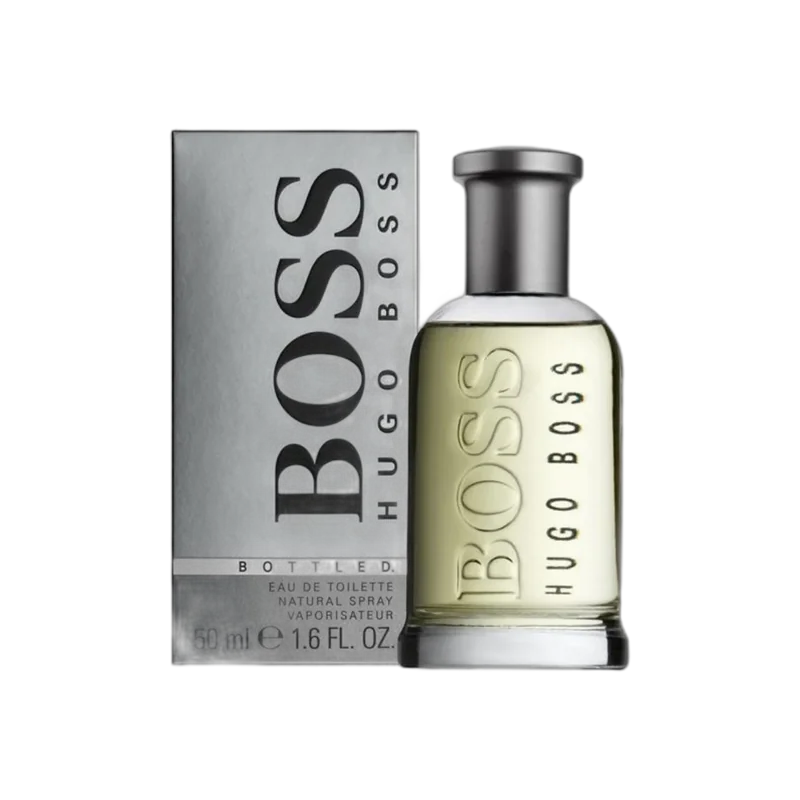
Boss No 1 Eau De Toilette
Four decades after its 1985 launch, Boss No 1 remains a reference point for the aromatic fougère style that dominated masculine fragrance in the 80s and defined what the category meant before aquatics rewrote the rulebook. It opens with bergamot and artemisia over a lavender and geranium heart, then dries down to a warm oakmoss, vetiver and cedarwood base that reads earthy and slightly leathery. The overall effect is what a well-dressed man in a serious suit smelled like through the 80s and into the early 90s, structured and formal in a way that reads confidently vintage by current standards. The house built its entire designer identity on this launch, and it remains a quietly influential scent for anyone curious about where the masculine fougère canon came from. Reformulated over the decades, as virtually everything from that era has been, the current version is a little softer than early batches, but the architecture is intact. It reads so differently from the Bottled and Scent lines — a reminder that Boss was serious about fragrance before it was commercially obvious to be. The oakmoss and artemisia base gives it a herbal, slightly bitter character that no current house release comes near.
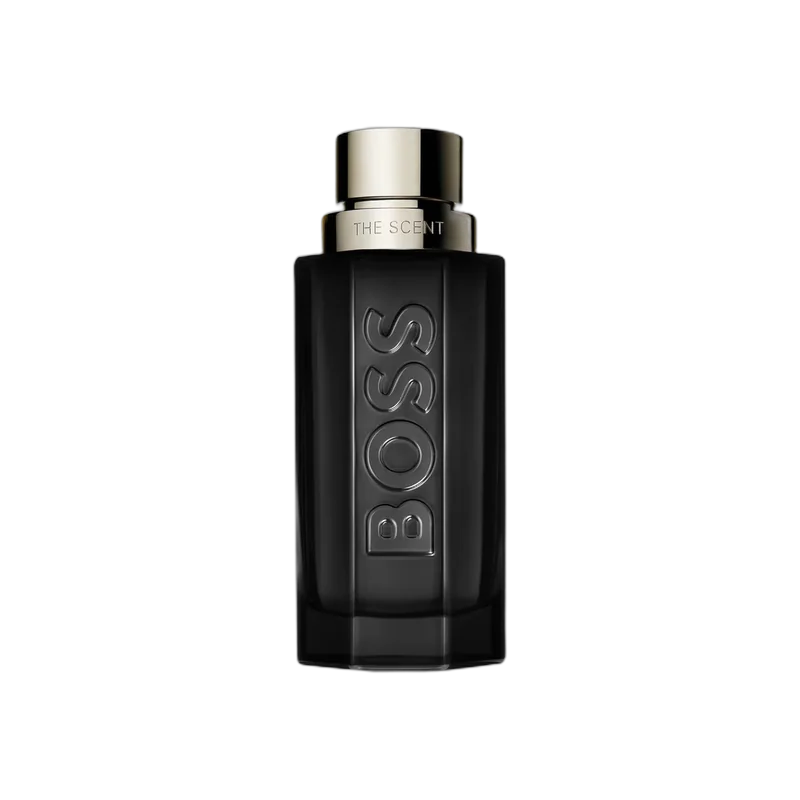
The Scent Magnetic Man
Louder and sweeter than the original it flanks, The Scent Magnetic Man from 2023 takes the familiar ginger-and-warm-base structure and amplifies it in every direction. The ginger here is sharper and more peppery at the open, and the base runs considerably sweeter, leaning into a vanilla-amber character that gives the whole scent a heavier, more gourmand feel. Where The Scent Man plays it cool and cinematic, Magnetic leans into the sillage — projection is notably stronger, making it a better choice for an evening setting where you want to announce your presence rather than let someone discover you. The dark flacon takes the original bottle's language and intensifies it, slightly more dramatic in proportion. It works best in cold weather, when the heavy base rewards the temperature rather than fighting it, and it suits anyone whose preference runs sweeter than The Scent Man's restrained leather-cocoa register. The trade-off for the extra projection is that it is less versatile: fewer occasions call for this much sweetness and volume, so it sits more comfortably in the rotation than as a daily driver. On live price, it is well positioned relative to The Scent Man and represents a real stylistic difference rather than a minor variation.
Hugo EDT and Boss No 1 are the archive picks, scents from decades before the Bottled era that read entirely differently from anything the house makes today. They share almost nothing with the apple-and-sandalwood direction that made Boss commercially dominant in the 2000s, and that is precisely what makes them interesting.
Boss No 1 is the formal aromatic fougère that built the brand, a lavender-and-oakmoss structure that smells confidently of its era in the best sense — it does not try to modernise and is better for not trying. Four decades on, it sits in the catalogue as one of the more affordable ways to own a properly constructed 80s fougère, a category that has largely been replaced by cleaner, synthetic-ambergris masculines. For anyone curious about where the masculine fougère canon came from and how it was constructed, Boss No 1 rewards the small investment.
Hugo EDT is the younger, fresher counterpart from the decade that followed, that aggressively green apple-and-tomato-leaf opening in the canteen-shaped bottle that defined a generation of young-masculine fragrance in the 90s. The bottle is still one of the more distinctive pieces of flaçon design from the period, and the scent inside reads as a genuine time capsule of how the industry thought about masculine freshness before aquatics became the default mode. It influenced a decade of cleaner, greener releases that came after it, and it remains the best way to understand what that creative moment felt like. Neither of these is the obvious first buy for someone coming to Hugo Boss cold. But if your interest runs to understanding the house properly rather than just wearing it conveniently, both are essential reading.
How to Choose
The simplest way to navigate the Hugo Boss range is to match the scent to the context and the season. For office and professional settings, the original Boss Bottled EDT remains the reference, and the EDP is the natural cold-month upgrade within the same genre. For evenings and darker, warmer occasions, The Scent Man is the first pick in the range, and the Parfum is the most interesting option for someone who wants something that reads closer to niche-inspired than department-store designer. The Scent Magnetic Man rewards those who want more volume and sweetness and have the occasion and the wardrobe to carry both.
On price, the whole range sits at accessible designer levels, which is one of the genuine arguments for the house. The Parfum commands a premium over the EDP and the original, but it sits well below what you would pay for the niche territory it aesthetically approaches — which makes it a reasonable consideration for anyone who shops with an eye on value as well as quality. Hugo EDT and Boss No 1 are among the most affordable entries on this list, making them easy additions to a rotation even if they are worn rarely. None of these bottles represent poor value relative to the category they compete in, and live lowest prices across the retailers we track are usually considerably below the full-retail figures you see in department stores.
One practical note before buying: sample before committing to the Parfum if you are expecting more of the Bottled register and less of the dark-fig-and-leather direction. The family resemblance is in the base, but it is a meaningfully different proposition and not universally preferred over the EDP, even by people who own and like the original. The rest of the range is predictable enough from a well-read description that blind buying at current prices is a reasonable risk, particularly for the Scent line and the EDP, which deliver broadly what they promise on paper. For the two archive originals, a sample is the better first step, since both are period pieces with strong stylistic signatures that do not suit everyone.
Compare Hugo Boss fragrance prices across every retailer on Aurexum