
Best Tea Fragrances
Why Tea Is One of the Hardest Notes to Get Right
Tea does not have a natural oil. Unlike rose or jasmine, there is no tea absolute you can pour into a formula and call it done. Every tea scent in a bottle is a construction — usually assembled from hedione (a jasmine-like synthetic molecule with a watery green quality), various ionones, and a selection of green or smoky elements that suggest the experience of drinking tea without any single ingredient actually being it. The result is a note family with enormous internal variety, and it is why two fragrances both marketed as "tea" can smell almost nothing alike.
Hedione in particular deserves a mention because it is one of the more interesting materials in the modern perfumer's toolkit. First isolated in the 1960s, it delivers a transparent, watery radiance that sits just at the edge of what the nose can name: not quite floral, not quite citrus, not quite green. When it is used at higher concentrations, the effect reads as luminous and diffuse, an aura around the wearer rather than a dense cloud. Combined with ionones — the violet-derived molecules that contribute a slight powdery or woody-green quality — and various green and smoky modifiers, you can arrive at convincing tea without a single gram of actual tea extract. The craft lies in the proportions.
That variety maps loosely onto the tea types we drink. Green tea accords tend to be clean, light and slightly citrusy, with a watery freshness that overlaps with the broader best fresh fragrances category. Matcha sits heavier and creamier, with a vegetal, almost ceremonial quality that gives perfumers more to work with. Oolong occupies the interesting middle ground, honeyed and slightly roasted, with enough complexity to support a full-scale niche fragrance built around it. Black and Earl Grey teas arrive already flavoured by bergamot, so those fragrances often read as citrus-tea hybrids rather than pure tea solos.
Understanding which style you want before you shop saves a lot of misdirected testing. The five picks below span the entire range.
The Five We Track
The five fragrances below cover the full spectrum — from the oolong benchmark at the top to a bergamot-tea Englishness at the other end, with creamy matcha, honest budget green tea and an aquatic-tea hybrid in between.
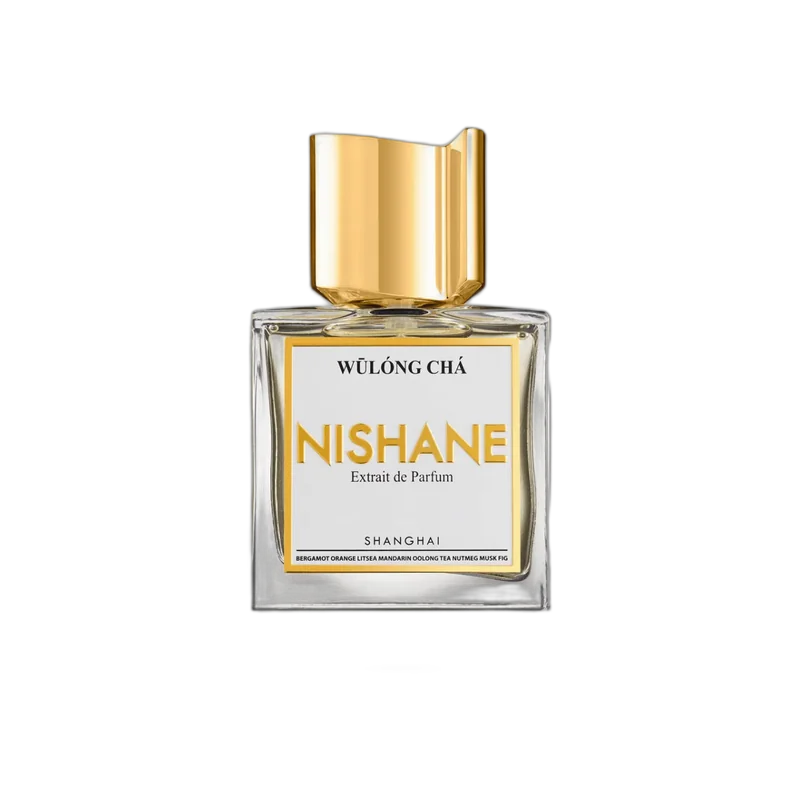
Wulong Cha Extrait De Parfum
Oolong tea has a particular quality in the cup — honeyed, lightly smoky, somewhere between the green world and the roasted one — and Nishane's 2014 release is the fragrance that pins that quality more precisely than anything else in the genre. Built from a dense, slightly animalic tea accord layered over birch, amber and tobacco, Wulong Cha reads as the tea moment after the first steep, when the leaves darken and the liquor deepens. There is sweetness in there, from the amber and a touch of vanilla, but the smoky, woody dry-down keeps it from reading as a gourmand. It wears unisex in practice: the concentration and the tenacity mean it projects with real authority in the opening hours and then settles into a long, resinous warmth on skin. Nishane is an Istanbul house and Wulong Cha is their most cited argument for taking niche tea seriously, a reference point the way certain soliflores define their floral family. The bottle itself is quietly architectural, a nod to the Turkish house's restrained design language. Nothing else in the tea category at this price occupies the same ground, and no subsequent release has managed to dislodge it.
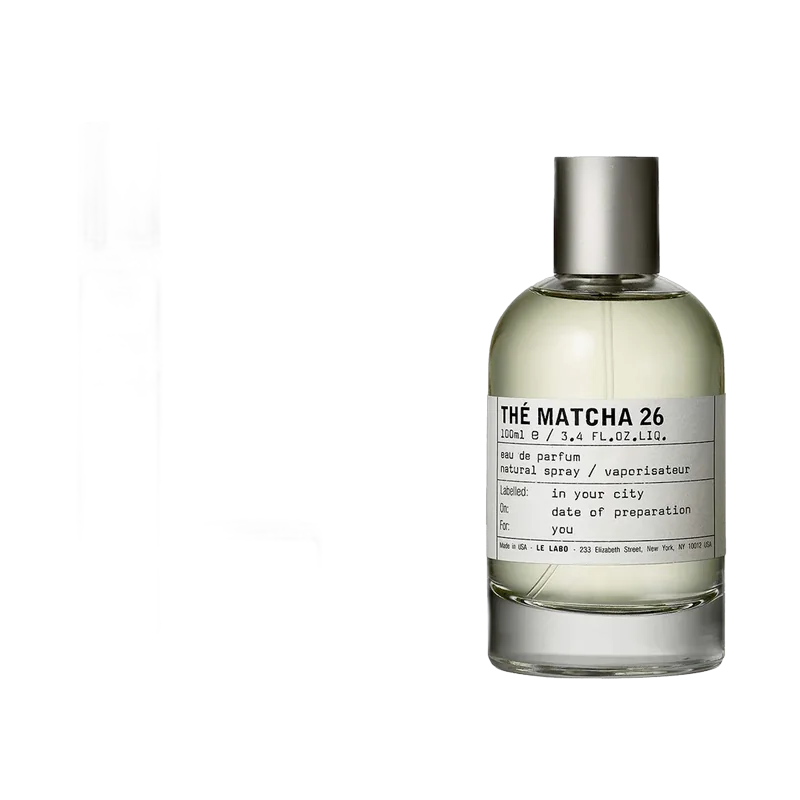
The Matcha 26
Matcha as a fragrance concept usually collapses into one of two dead ends: either it goes too vegetal and reads as a salad, or the creaminess swamps everything and you get vanilla with a green wash. Le Labo's 2021 release avoids both traps. Thé Matcha 26 opens with a slightly bitter green note that is distinctly ceremonial-grade matcha rather than fresh-mown grass, then a fig-leaf facet pulls in over the first hour, adding a milky, slightly animalic ripeness that softens the edge without going sweet. The base is cedar and clean musk, keeping the dry-down dry rather than sugary. It is a cool-weather scent that wears closer to an aromatic green than a gourmand, and the projection is polished and moderate, a considered skin scent rather than a room-filler. Le Labo's city-exclusive system gave it the 26 suffix for its origin, though it now circulates much more widely. The stripped-back apothecary bottle and the house's usual refill infrastructure make it feel considered rather than flashy. The Montale and the Le Labo share a category name but almost nothing else in approach; tried back to back, they demonstrate the full range of what matcha can do in a bottle.
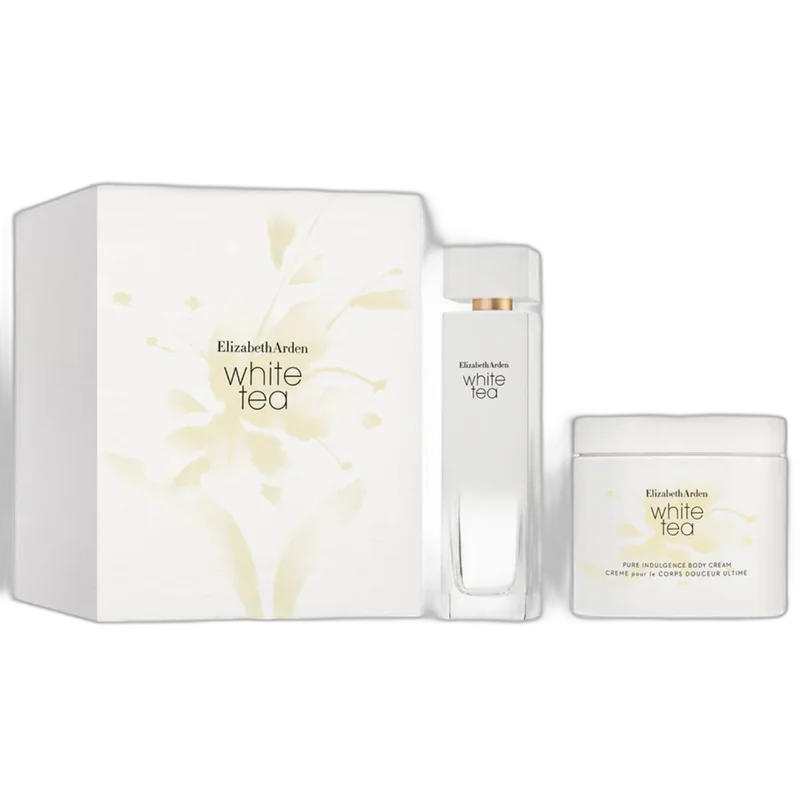
White Tea Eau De Toilette
Green tea's presence in the mass market is largely due to a handful of releases in the late 1990s that rewired what fresh could mean in a fragrance, and Elizabeth Arden's White Tea from 2017 belongs to that same family of ideas without being a throwback. Where the early genre entries leaned watery and thin, White Tea chooses warmth: a musky white tea accord over cedarwood and a gentle amber, with just enough citrus in the top to give it a clean, airy open. It is not a challenging scent, which is its honest strength. It wears as a comfortable, gender-neutral skin scent that suits warmer weather, the office, or anywhere you want to smell freshly showered without spending niche money. Performance is modest, as expected for the price, but it lingers long enough to be worth the spend. The Elizabeth Arden name carries department-store ubiquity and a price point that makes it the obvious entry-level recommendation when someone asks whether tea fragrances are worth exploring. Stocked widely, it is usually available at live prices well under the full retail figure. Buy a bottle, live with it for a week, and use what you learn to decide whether the niche alternatives are worth the step up.
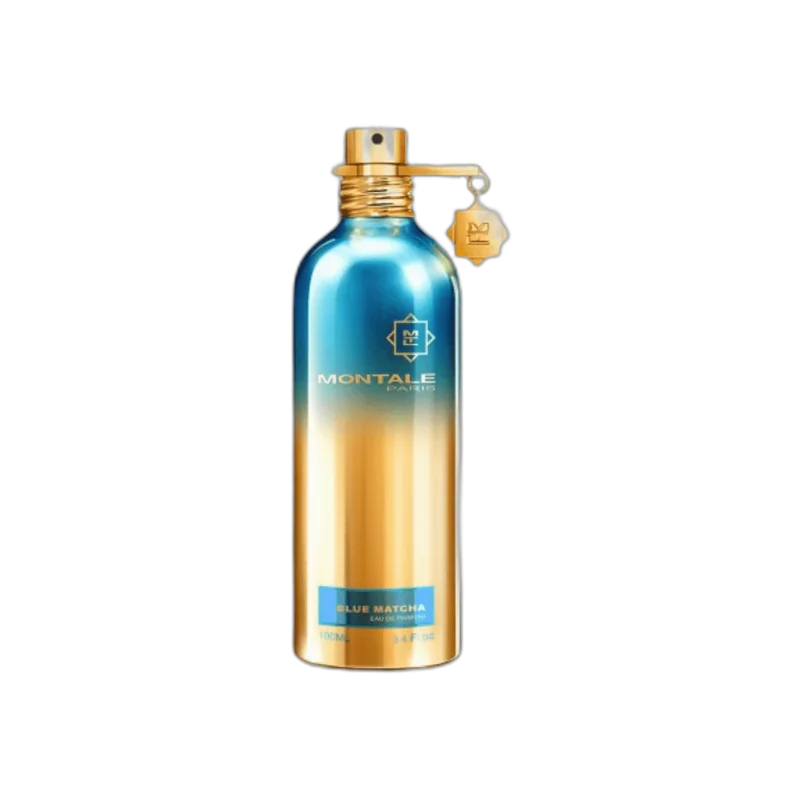
Blue Matcha
Montale has never been shy about colour and noise, and Blue Matcha, released in 2021, fits that house character perfectly. The opening is aquatic and cool, closer to an ozonic blue accord than anything you would find in a teapot, before a matcha note arrives underneath and anchors the whole thing in something greener and more substantial. Patchouli and sandalwood form the base, lending a woody body that stops it dissolving into a one-dimensional aquatic. The effect is a matcha-sea hybrid sitting at the louder, more casual end of the tea category — beachside or office-on-a-hot-day territory rather than a contemplative Japanese tea house. Projection is assertive in the opening hours and performance is solid, a Montale house trait. The flacon is the usual heavy Montale design, navy blue to match the aquatic angle. It wears unisex and skews younger, and the price sits in the affordable-niche bracket where the house usually lands. For anyone drawn to tea but also wanting the freshness of a blue fragrance, Blue Matcha occupies a genuinely distinct corner of the category, an aquatic-tea crossover that reads vivid and unpretentious.
Earl Grey And Cucumber
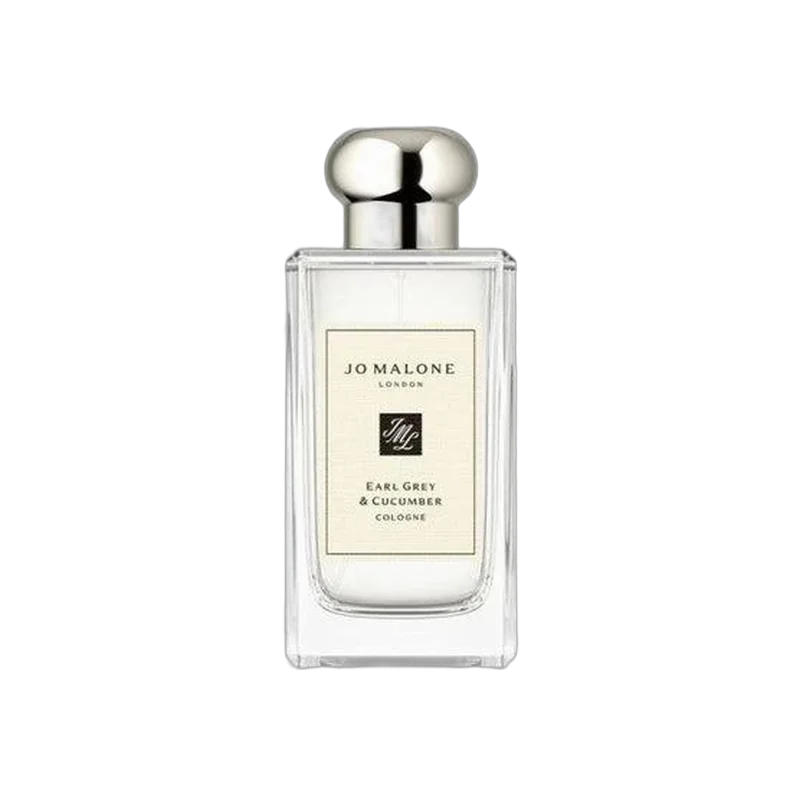
Earl Grey in the cup is bergamot over black tea, and Jo Malone's 2011 release captures that pairing with unusual fidelity. Earl Grey & Cucumber opens with a precise bergamot note — bitter, citrus-bright, the thing that gives the tea its character — and then a watery cucumber accord sits alongside it to add crispness without muddying the tea. The base is white musk and cedarwood, quietly holding things together as the bergamot fades. The result is unmistakably English in mood: afternoon, cool, unhurried. Performance is limited, as is honest for the Jo Malone format, and it wears as a light skin scent rather than a projector. That is partly the point. The cologne format is designed for layering, and Earl Grey & Cucumber works naturally as a top-note layer over richer amber or woody bases when you want something more substantial. The house's cream-and-black bottle is recognisable globally and the fragrance enjoys comfortable stocking in the retailers we track. The bergamot angle sits it squarely in the green-citrus corner of the fresh fragrance world. For a bergamot-tea that reads authentically of the cup it references, this is the most literal and the most English interpretation on the list.
The Niche and the Mainstream, Explained
Wulong Cha and Thé Matcha 26 sit at the niche end of this list, and the price gap between them and the Elizabeth Arden or Jo Malone picks is real. Whether the gap is justified depends on what you need from the scent.
Nishane's oolong is the most fully realised tea fragrance here: it wears longer, projects harder and does something the mainstream alternatives cannot replicate. The smoky, animalic depth of Wulong Cha has no equivalent at a lower price, and if oolong is specifically what you are after, there is no point looking elsewhere. For a broader sense of the house's range, the full Nishane guide covers its other benchmarks.
Le Labo Thé Matcha 26 earns its niche positioning by handling the matcha accord with precision. The fig-leaf nuance and the dry cedar base are not things you find in mass-market matcha attempts, and the house's apothecary format appeals to people who find designer packaging alienating. Whether it is worth the spend over the Montale depends on whether you want polished restraint or casual assertiveness.
Elizabeth Arden White Tea sits at the opposite end and it knows it. The brief is comfort and accessibility, not complexity, and it delivers both reliably. For a first tea fragrance, or for someone who wants something low-commitment to wear in summer without reaching for niche money, White Tea is genuinely the sensible choice rather than a compromise you settle for.
Montale Blue Matcha belongs in its own conversation because it is not really a tea fragrance in any contemplative sense. It is an aquatic with matcha grafted on top, and it wears accordingly. The people who will love it most are likely already fans of blue and aquatic fragrances who want something a little more grounded.
Jo Malone Earl Grey & Cucumber is the lightest of the group and the most faithful to the actual experience of an Earl Grey cup. The bergamot-cucumber combination is precise and lovely, and the limited longevity is a fair trade for something that occupies the cologne-layer space so naturally.
Oolong and Roasted Teas
Wulong Cha stands alone here. There are roasted tea experiments from smaller houses, but none have achieved the same depth or the same critical standing at the accessible niche price point. The oolong category is underserved relative to how interesting the raw material idea is, which is partly why the Nishane release carries so much authority: it has not been meaningfully challenged. If you are new to oolong as a concept, this is both the beginning and the end of the search.
Matcha
Thé Matcha 26 is the serious option, Blue Matcha the louder casual alternative. They share a category name but almost nothing else: the Le Labo is introverted and precise, the Montale is open and aquatic. Which suits you depends entirely on what occasion you are dressing for. The matcha category has grown quickly in the last few years as ceremonial-grade matcha moved from specialty cafes into mainstream culture, and perfumers have followed accordingly, though few have matched Le Labo's restraint.
Green and White Tea
Elizabeth Arden White Tea occupies the mainstream corner here, a sensible daily driver with no pretensions. If you want a more complex take on the same clean-green tea idea, the best green fragrances guide covers a wider field, including picks that share the watery, herbaceous DNA of white tea but push further into citrus and botanical territory.
Earl Grey and Bergamot-Tea
Earl Grey & Cucumber is the definitive pick at any price, and the bergamot angle means it works well as a layering piece over amber or musk bases when you want something with a little more substance than a standalone light scent. The Jo Malone house built its reputation on exactly this kind of precise, English-sourced reference, and Earl Grey & Cucumber remains one of the more convincing examples in the cologne range.
How to Choose
Start with the style of tea, not the brand. If you want something meditative and lasting, with enough complexity to justify a proper wear, Wulong Cha and Thé Matcha 26 are the two to sample first, ideally both, because they demonstrate opposite ends of what matcha and oolong can do at their best.
If budget is the first constraint, White Tea delivers genuine tea character at a price that makes sampling risk-free. Buy a bottle and live with it before spending more.
If you are drawn to aquatic or fresh fragrances and want to see whether a tea note adds something useful to that register, Blue Matcha is the natural bridge. It will not convert you to the contemplative end of the category but it is genuinely good at what it does.
And if you own a Jo Malone you love and want to understand how Earl Grey layers, start there. The house's cologne format exists to be combined, and Earl Grey & Cucumber is one of the more natural layering partners in the range.
Performance expectations deserve an honest note. Tea accords are generally not the heaviest constructions in perfumery: the materials that build them are often thin molecules that lift and disperse quickly. Wulong Cha is the exception, anchored by its amber and tobacco base. The others range from moderate to light, and for any of the fresher picks, application to hair or clothing will extend the experience considerably. A common mistake with light tea fragrances is under-applying on first wear, deciding the performance is poor, and writing the whole category off. The solution is a heavier hand or a fabric spray rather than a different bottle.
It is also worth noting that the tea category ages better than many fresh note families. Watery aquatics from the 1990s and early 2000s often smell dated now, but the good tea scents of the same era have worn more gracefully because the tea accord adds structure and a faint tannic quality that grounds them. Elizabeth Arden White Tea is younger than most genre entries but follows in a lineage that has proven more durable than the sheer ozonic freshness trend that surrounded it. That is a reasonable argument for treating a well-made tea scent as a long-term wardrobe piece rather than a seasonal one.
Compare tea fragrance prices across every retailer on Aurexum